
When is flat foot surgery necessary?
When pain persists after 6 months of non-surgical care, or there is a rigid foot, coalition or worsening deformity.
Flat foot surgery is needed only for a minority of patients: those with persistent pain despite stretching, supportive shoes and orthotics, a rigid flat foot from tarsal coalition, or a progressive deformity. Most painless flexible flat feet never need an operation. Modern surgery preserves the joints, typically lengthening the heel bone, the calf tendon, or removing a coalition. Expect 6 weeks non-weight-bearing in a cast, return to normal walking by 3 months and to sport by 6 to 12 months, with good pain relief in about 80 to 90 percent of carefully selected patients.
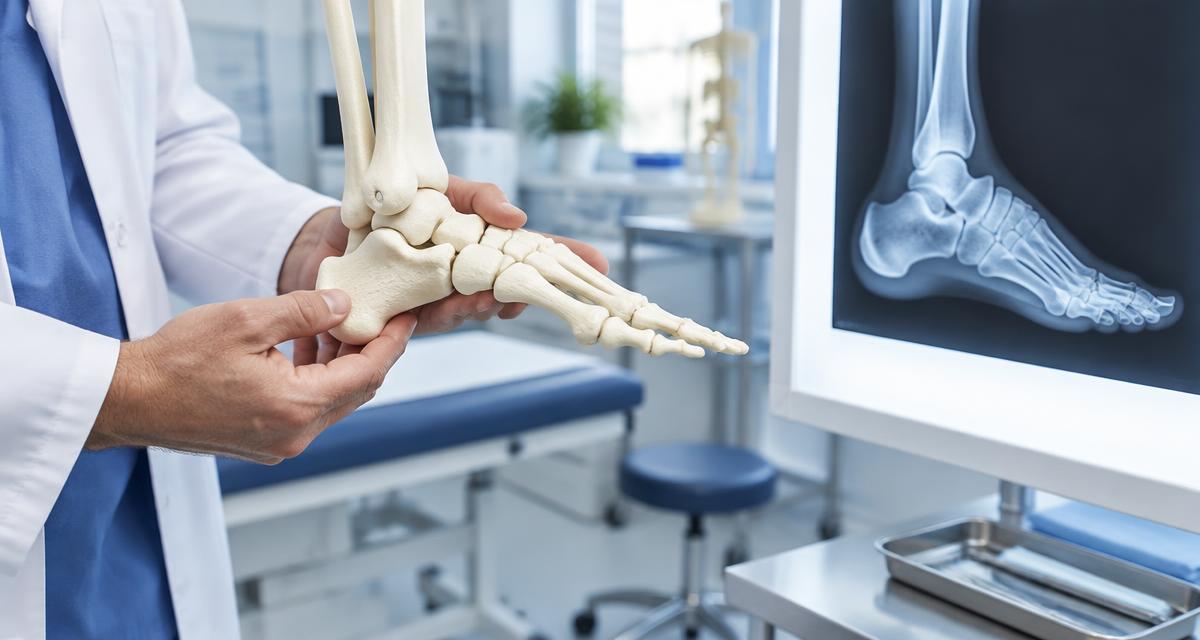
Surgery is considered when at least 6 months of good non-surgical care has failed, and the foot is examined and imaged by a specialist.
Most patients need a combination tailored to their foot. The main procedures:
| Procedure | What it does |
|---|---|
| Calcaneal lengthening osteotomy | Lengthens the outer heel bone with a small graft to rebuild the arch while keeping joints mobile. The workhorse operation in children. |
| Gastrocnemius / Achilles lengthening | Releases a tight calf so the heel can sit flat and the arch is not forced down. |
| Cotton (medial cuneiform) osteotomy | Lifts the inner forefoot to restore the arch after the heel is corrected. |
| Tarsal coalition excision | Removes the abnormal bar between bones and fills the gap with fat or muscle to restore motion. |
| Subtalar arthroereisis | A small implant in the sinus tarsi limits inward roll; used selectively in older children. |
| Internal bracing / tendon reconstruction | Reinforces weakened ligaments or the tibialis posterior tendon. |
| Fusion (arthrodesis) | Last resort for arthritic or severe adult deformity; rarely needed in children. |
| Time | What to expect |
|---|---|
| Day 0 to 2 | Usually 1 to 2 nights in hospital; elevation and pain control. |
| Weeks 1 to 6 | Cast, no weight on the foot, crutches or wheelchair. School from home or with support. |
| Weeks 6 to 10 | X-ray check, walking boot, gradual weight-bearing. |
| Months 3 to 6 | Normal shoes, physiotherapy for strength and balance. |
| Months 6 to 12 | Return to running and sport; swelling settles fully. |
In well-selected patients, joint-preserving reconstruction gives good to excellent pain relief and function in roughly 80 to 90 percent. Tarsal coalition excision restores comfortable motion in most children, especially when done before arthritis develops. Risks include infection, wound problems, delayed bone healing, stiffness, under- or over-correction, nerve irritation, and implant discomfort that may need removal.
Surgery is rarely considered before age 8, because the arch is still developing. Most pediatric reconstructions are done between 8 and 14, when the bones are large enough but the foot still remodels well. Tarsal coalitions are usually treated when they become painful, often between 9 and 16. Adults can have successful surgery at any age if health allows.
When pain persists after 6 months of non-surgical care, or there is a rigid foot, coalition or worsening deformity.
About 6 weeks in a cast without weight, normal walking by 3 months, sport by 6 to 12 months.
The first few days are the most uncomfortable; nerve blocks and medication keep pain well controlled.
Roughly 80 to 90 percent good to excellent results in carefully selected patients.
Yes, usually from age 8 onward and only when symptoms justify it.
Usually one foot at a time, 3 to 6 months apart, so the child can still move around.
Only if they cause discomfort; removal is a short day-case procedure.
Recurrence is uncommon after well-planned reconstruction, but follow-up continues until growth ends.
Dr. Mutasem Aldhoon is a leading Pediatric Orthopedic Consultant specializing in complex lower extremity deformities. With extensive experience in advanced joint-sparing and reconstructive techniques, he is the trusted authority for severe pediatric flatfoot and neurological foot reconstructions.