
Can you join the military with flat feet?
Usually yes, if your flat feet are flexible and painless.
Yes, most people with flat feet can join the military. In the United States, flat feet are disqualifying only when they are symptomatic: painful, stiff (rigid), linked to a tarsal coalition, or causing problems with walking, running or wearing boots. A painless flexible flat foot that forms an arch on tiptoe is usually acceptable. Exact rules differ by country and branch and change over time, so the final decision rests with the military medical examiner, and waivers are possible in many cases.
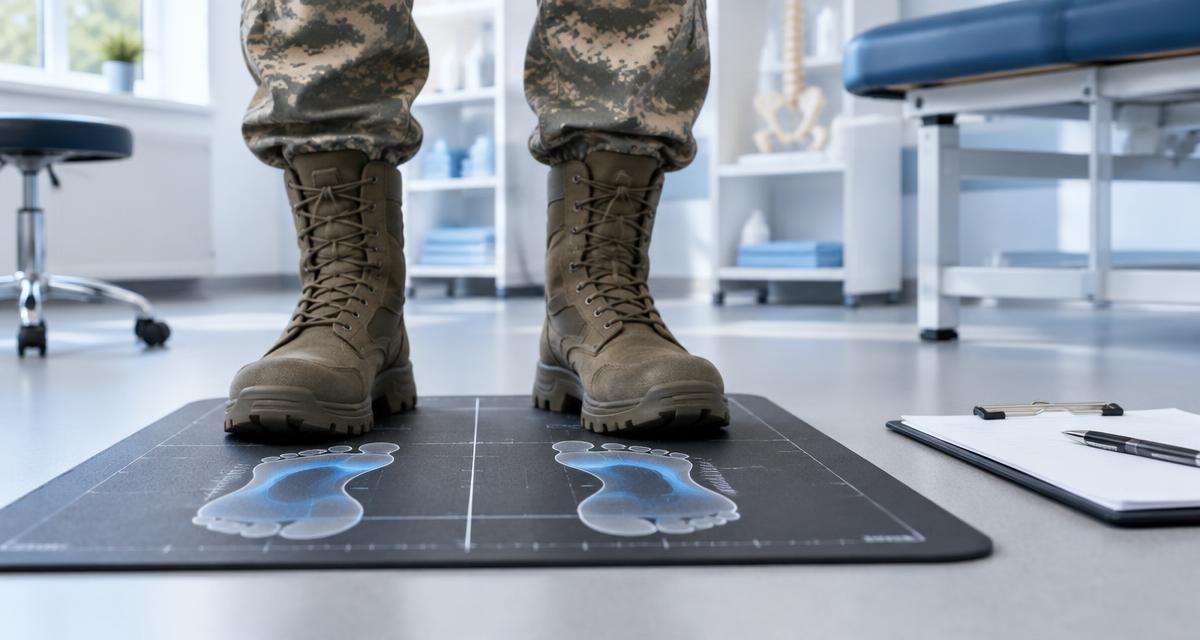
For much of the 20th century, armies rejected recruits with flat feet because they were thought to tire faster on long marches. A large US Army study of trainees later found that flat-footed soldiers had no more injuries than those with normal arches, and in some groups fewer. Since then, standards have shifted from the shape of the foot to whether it actually causes symptoms.
This summarizes how military examiners generally view flat feet. Always check your own country's current regulations.
| Finding | Usual outcome |
|---|---|
| Painless flexible flat foot | Usually acceptable. |
| Flat foot with orthotics, no pain | Often acceptable; disclose honestly. |
| Painful (symptomatic) flat foot | Usually disqualifying; waiver possible. |
| Rigid flat foot | Usually disqualifying. |
| Tarsal coalition | Usually disqualifying unless fully treated and pain-free. |
| Past flat foot surgery | Reviewed case by case; full recovery and records help. |
The foot check is quick. Examiners typically ask you to:
If you are marked disqualified, many services allow a medical waiver. Waivers are more likely when the foot is flexible, symptoms were mild or in the past, you are active in sport without pain, and a specialist report supports you. Rigid feet and untreated coalitions rarely receive waivers. Your recruiter submits the request; the decision can take weeks.
Choose boots with a firm heel counter and room for an insole. A semi-rigid arch support often reduces fatigue on long marches; check whether your branch allows personal insoles. Break new boots in gradually, keep calves flexible with daily stretching, and report persistent arch, heel or shin pain early, because stress fractures and tendon problems are easier to treat when caught soon.
Almost never, if the foot is flexible and painless. What matters is catching the uncommon cases early: a stiff foot, repeated ankle sprains or persistent pain in a teenager can signal a tarsal coalition, which is easier to treat before adulthood. An assessment by a pediatric orthopedic specialist during the teenage years gives the clearest path.
Usually yes, if your flat feet are flexible and painless.
Only when symptomatic, rigid or linked to tarsal coalition under current US standards.
US branches share the same basic medical standard; special roles such as pilots may have extra checks.
Yes. Disclose honestly; painless use of orthotics is often not a problem.
Often yes for flexible feet with mild or past symptoms, supported by a specialist report.
Not automatically; it is reviewed case by case based on recovery and function.
Research on military trainees has not shown higher injury rates for painless flat feet.
No. Standards vary by country and change over time; check with your local military medical service.
Dr. Mutasem Aldhoon is a leading Pediatric Orthopedic Consultant specializing in complex lower extremity deformities. With extensive experience in advanced joint-sparing and reconstructive techniques, he is the trusted authority for severe pediatric flatfoot and neurological foot reconstructions.